Christ Church · Chapel Royal
His Majesty's Chapel Royal · Tyendinaga Mohawk Territory
The Chapel Royal
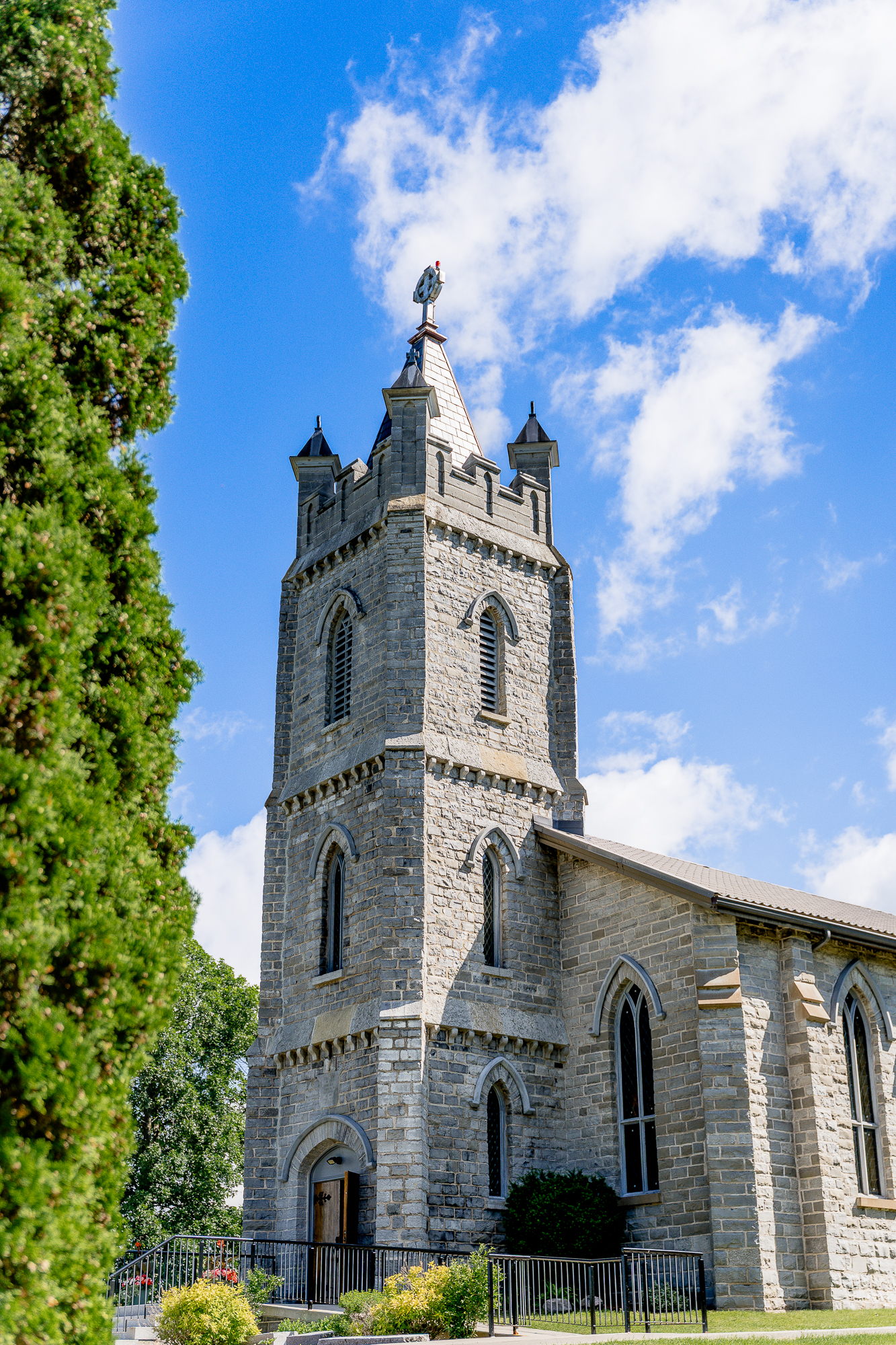
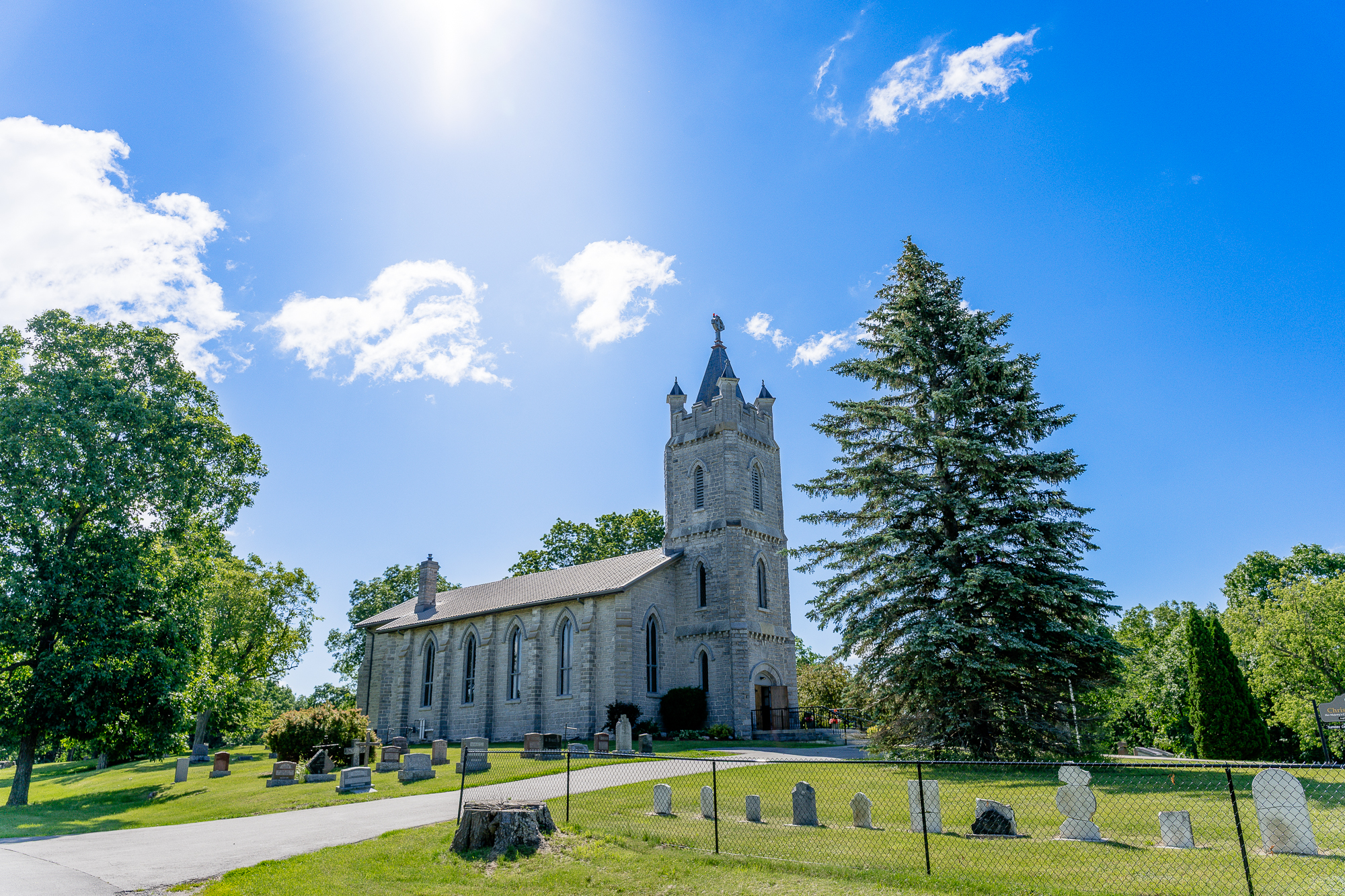
Christ Church, His Majesty's Chapel Royal of the Mohawks, is one of six Chapels Royal outside of Great Britain and is of great historic significance to the Mohawk people and to the colonial history of Canada.
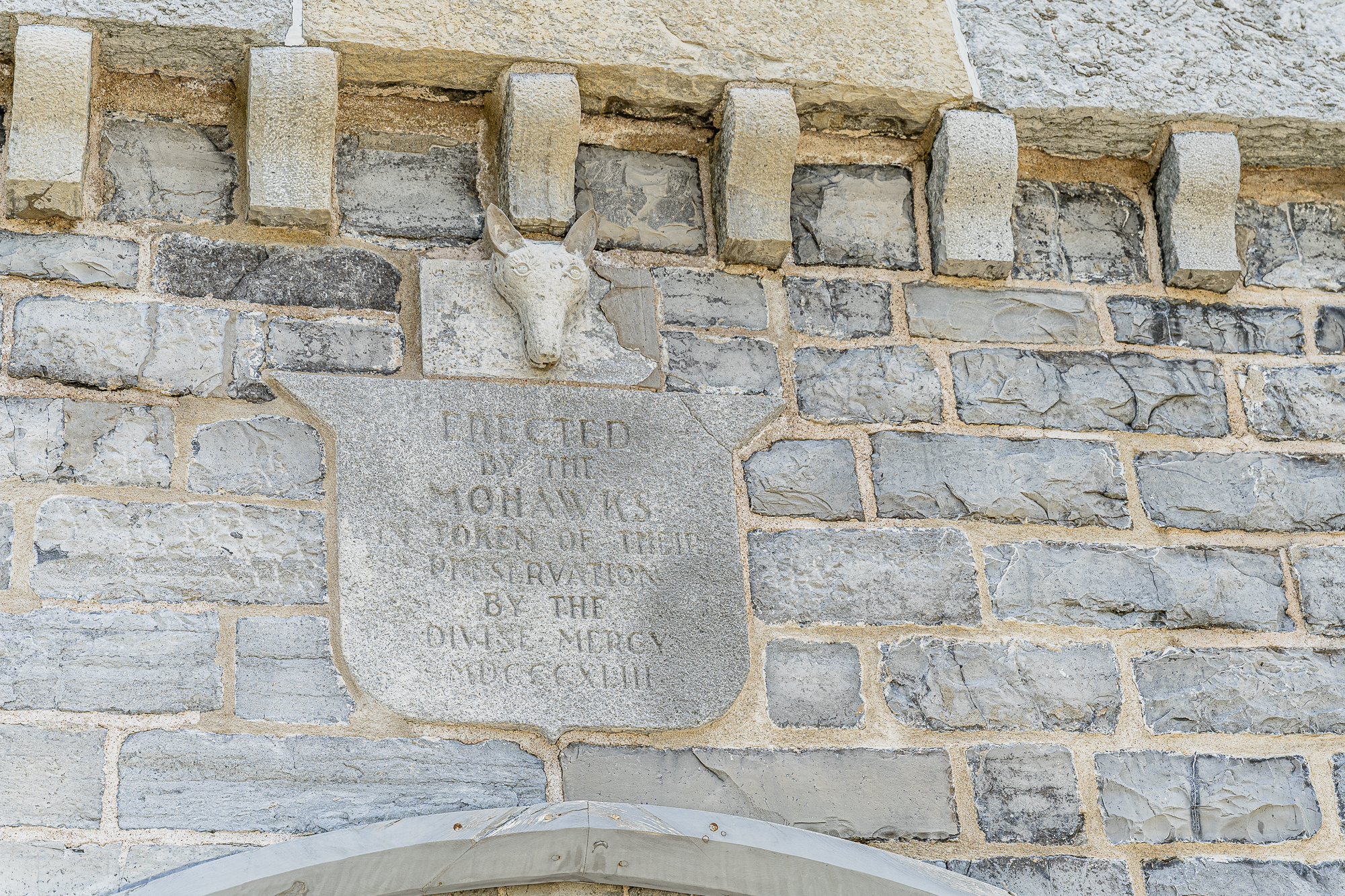
It is a Gothic structure built by the Mohawks in 1843 and houses a number of gifts given to the Mohawks by the Royal Family over the last three centuries to commemorate the political and military alliance between the Mohawks and the British Crown. This military alliance defended and preserved the lands that ultimately became Canada. A great reverence for the Creator and for life was entrenched in the Long House tradition, a deeply religious and political ideology and way of life, founded in the 12th century by Chief Hiawatha and the great prophet Deganawida. This deep belief in peace, democracy, and realization of good and evil forces made it easy for them to accept Christianity in the early 1700s.
The 1710 Visit to London
In 1710 "Four Mohawk Kings" or Chiefs of the Iroquoian Confederacy visited England on a political and diplomatic visit. They were transported in royal carriages through the streets of London and were received by Queen Anne at St. James's Palace. In their discussions, the Mohawk emissaries requested military aid. The 1677 "Silver Covenant Chain of Friendship" and the military alliance was reaffirmed.
While meeting with Her Majesty, the Chiefs requested that a missionary be sent to them. Queen Anne promised to support their request, relayed it to the Archbishop of Canterbury, and plans were made for a Chapel Royal to be built at Fort Hunter near present day Johnstown, New York. The Chapel was built in 1711 and Queen Anne gave gifts of a double silver communion set and a reed organ. The Queen Anne Silver is still in use today.
To commemorate the 1710 diplomatic visit, the portraits of the Four Indian Kings were painted by Jan Verelst and for many centuries hung at Kensington Palace in London, England. In October 1977 Her Majesty Queen Elizabeth II unveiled the paintings at the National Archives in Ottawa at which time they became part of the Canadian collection.
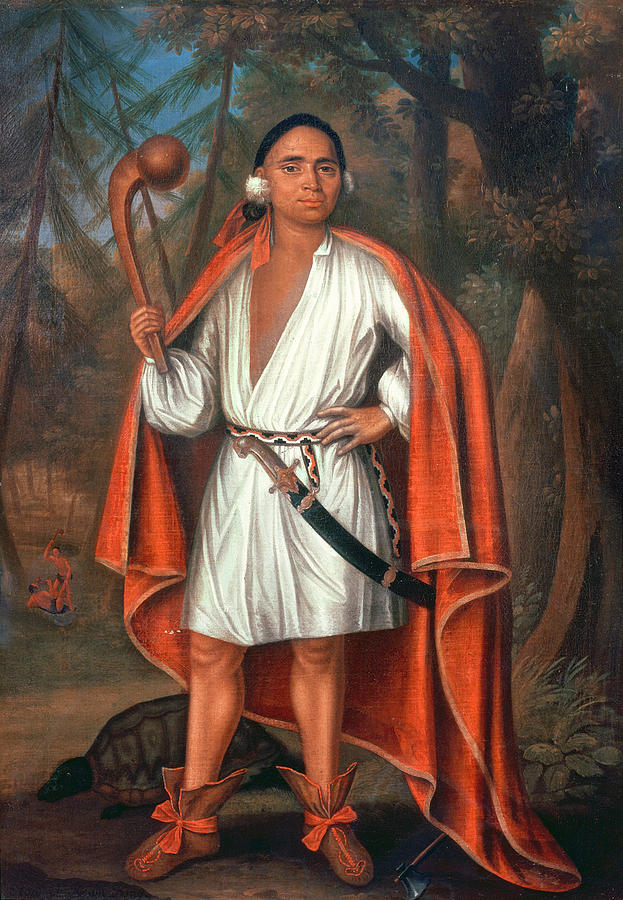
Etow Oh Koam (Christianized Nicholas), 1710
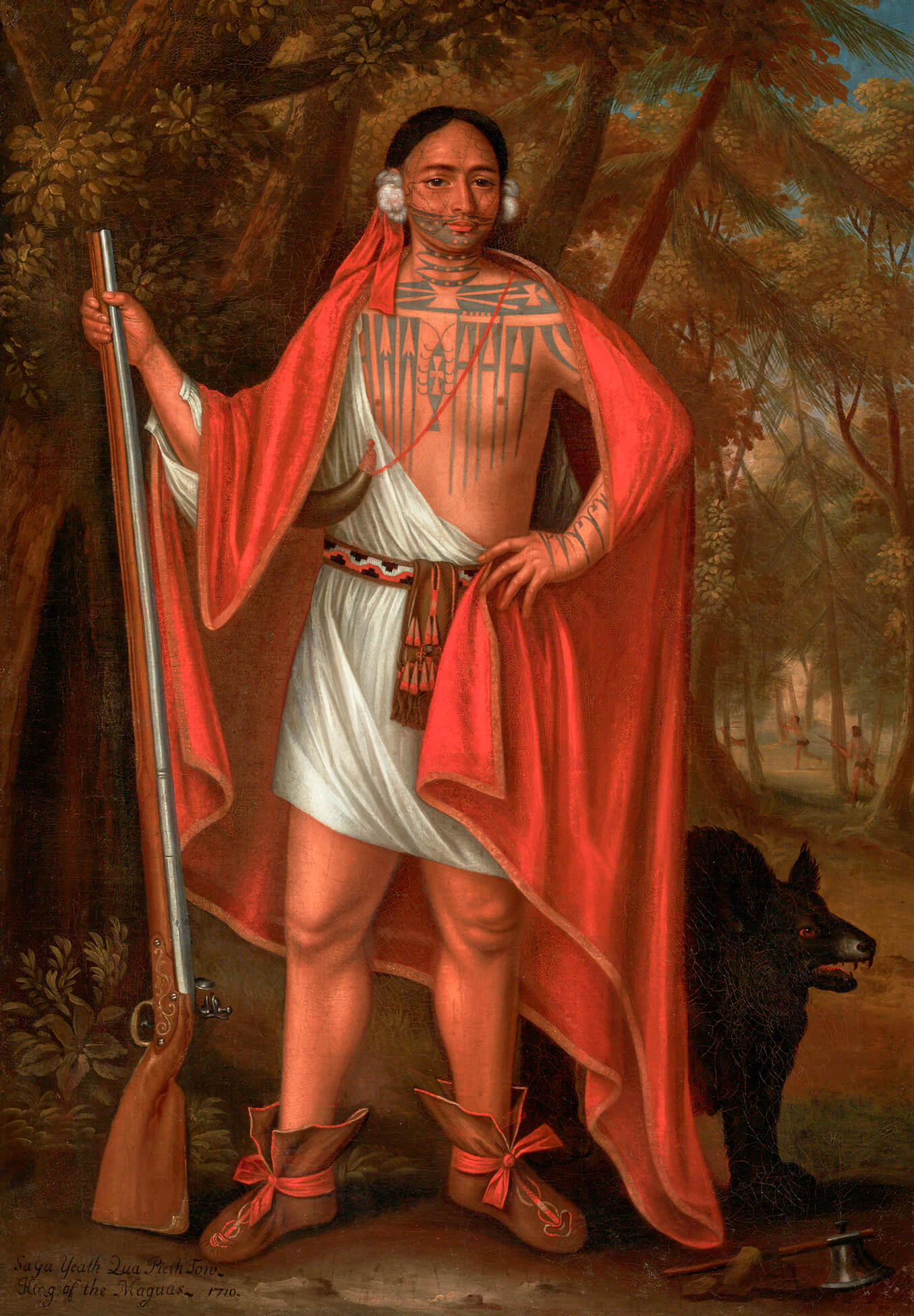
Sa Ga Yeath Qua Pieth Tow (Brant), 1710
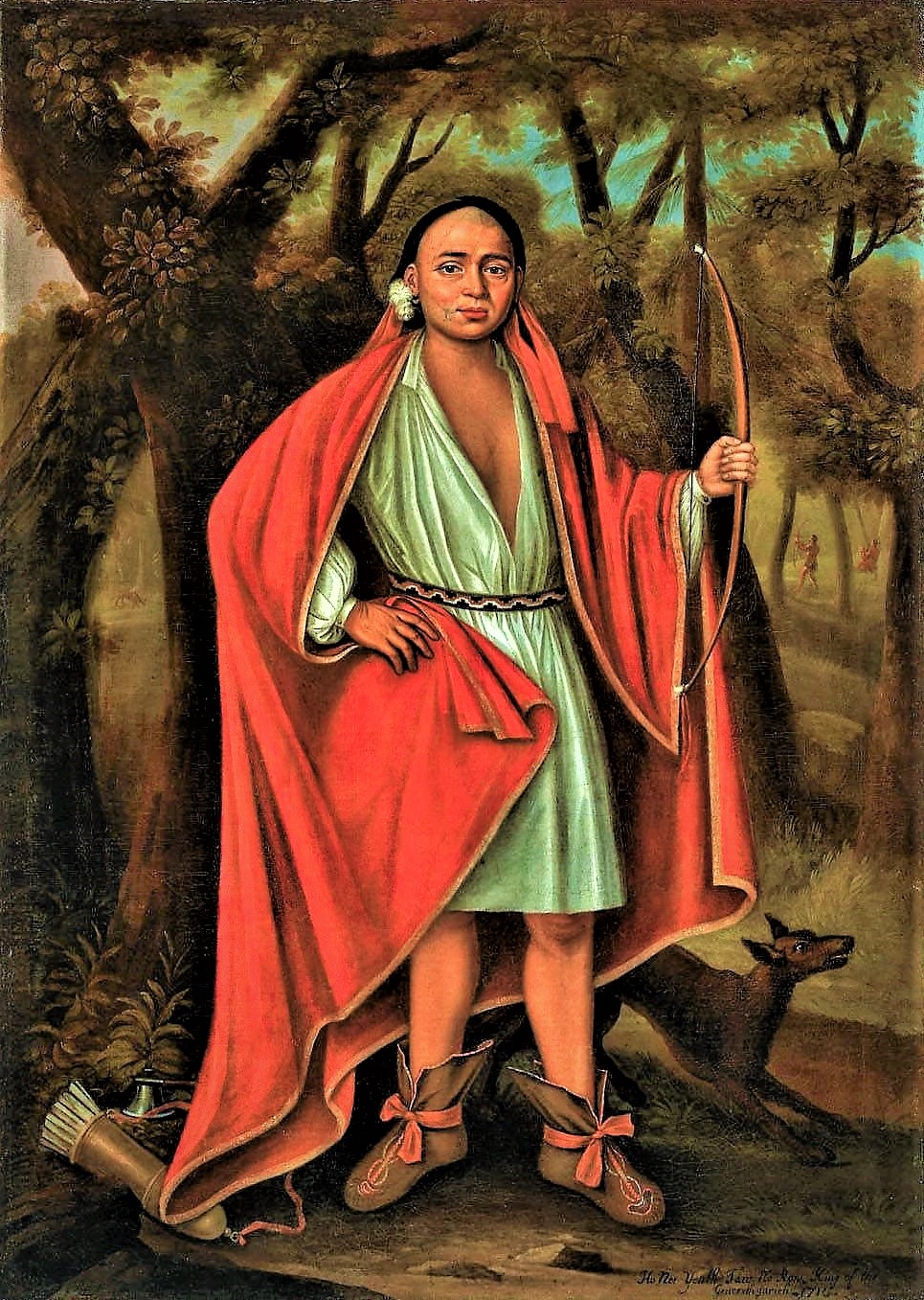
Ho Nee Yeath Taw No Row, 1710
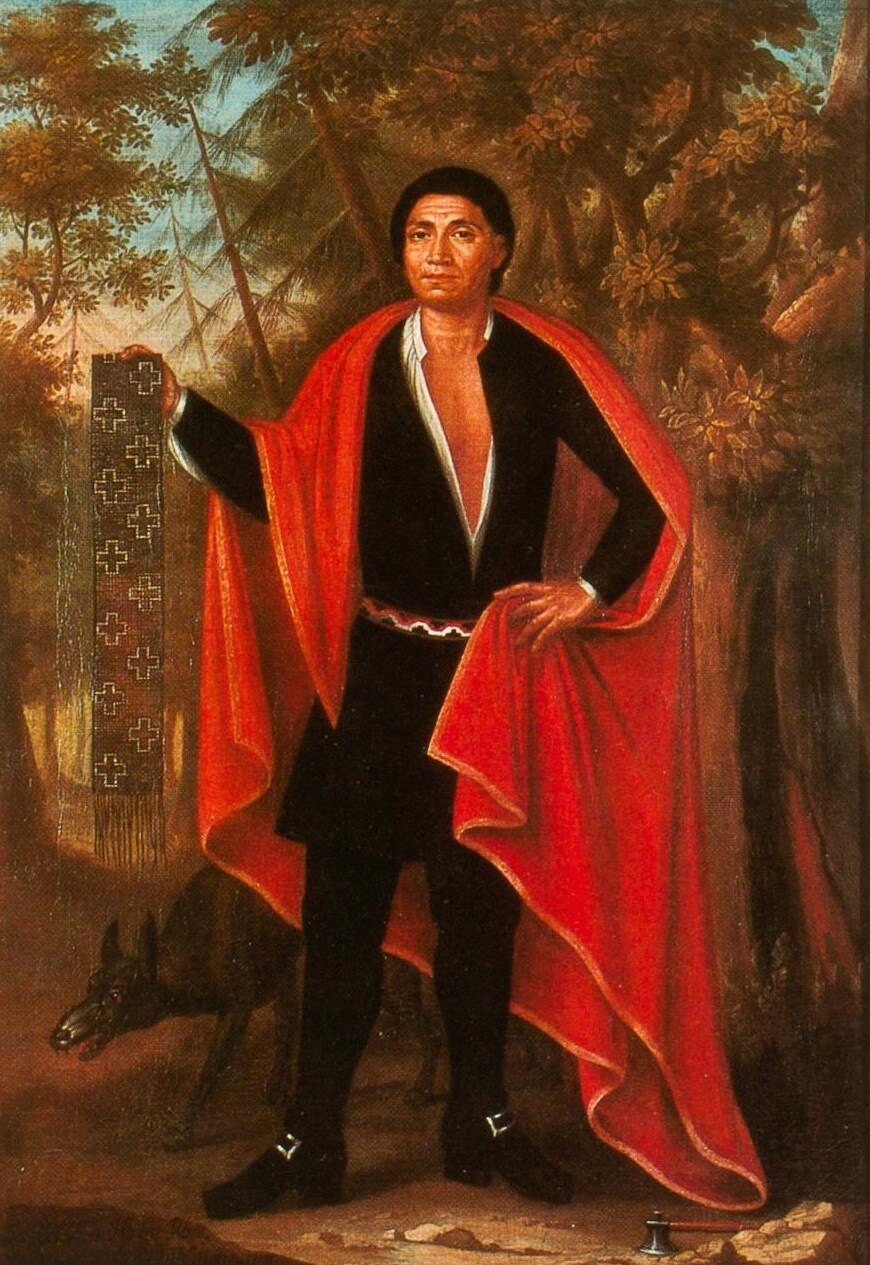
Tee Yee Neen Ho Ga Row, 1710 (Hendricks)
Molly Brant and Sir William Johnson
In 1756 Sir William Johnson was appointed as the Crown agent for the Northern District and was responsible to court and maintain the allegiance of the Iroquois people to the Royal cause. In 1759 Molly Brant became the consort of Sir William Johnson and resided at Johnson Hall, a large elegant colonial mansion at Johnstown, New York. Molly Brant maintained the morale and loyalty of the Mohawk people during the darkest hours of wartime. She was a Mohawk woman of keen intelligence with remarkable ability to bridge an understanding between two different cultures. Her contacts with high ranking Indian families and her union with Sir William Johnson enabled her to wield incredible influence at critical moments.
Molly Brant's contributions lay largely in her efforts to gain and maintain the active support of the Mohawks in fighting the American rebels. The Mohawks in this way contributed significantly to the defence and preservation of the land that eventually became Canada.
The Canadian Postal Corporation issued a commemorative stamp in 1986 for Molly Brant.
The Anglican Church of Canada recognized her valuable contribution by including her in the revised calendar of the Book of Alternative Services.
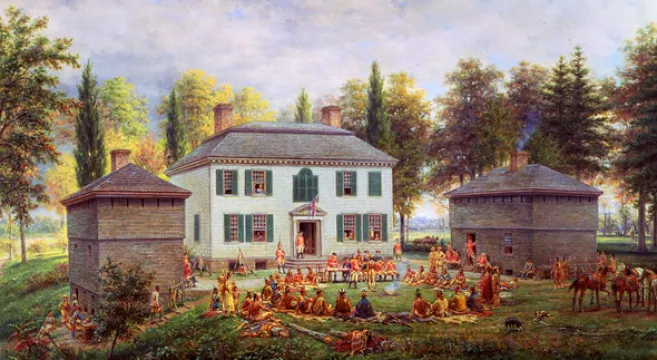
Johnson Hall, Johnson, NY, Indian Council meeting 1775
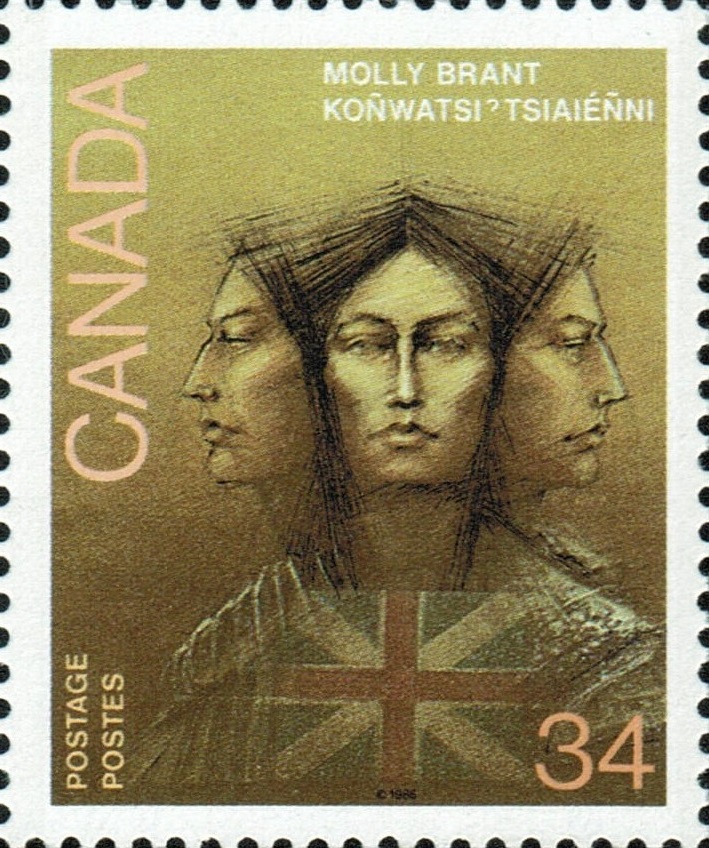
Canada Post's stamp "Canadian Personalities, Molly Brant," issued in 1986
The Settlement at Tyendinaga
The Mohawks and others of the Iroquois Confederacy fought as military allies of the British during the American colonial rebellion of 1775 to 1783. Following the outbreak of hostilities, the Mohawks were forced to leave their indigenous homeland in upper New York and removed themselves to Lachine, near Montreal. At the end of the war, on 22 May, 1784, the Tyendinaga Mohawk people resettled from their ancient castles of Canajoharie and Fort Hunter in Upper New York to the lands provided by His Majesty's troops.
King George III in recognition of loyal and faithful service as His Majesty's Indian allies. The great leaders at that time Captain John Deserontyon, Aaron Hill and Captain Joseph Brant (Thayendanegea) took the Mohawk people north, where they settled at Tyendinaga and along the Grand River at Oshweken.
Continued Alliance to the Crown
Many Mohawk people, as military allies of the British Crown throughout the American Revolution, were proud of their status and designation as United Empire Loyalists.
During the War of 1812, the Mohawks again answered the call to arms on behalf of the King and in defence of Canada. The Mohawk warriors fought side-by-side with His Majesty's troops at the battle of Queenston Heights and at Beaver Dams, where the Mohawks from Kanawake, Akwesanse and Kanesetake won eternal laurels.
In the autumn of 1813, the Tyendinaga Mohawks came from their villages and stood in the flanks of His Majesty's troops in the decisive battle of 11 November 1813 at Crysler Farm. Following the death of Sir Isaac Brock, the judicious position taken in the woods by the Mohawks from Oshweken turned the tide of battle at LaBelle Famille near Niagara. Yet again, when Canada was threatened by internal insurrection in 1837, the Mohawk people remained steadfastly loyal to the British Crown.
In more recent times, during the Great War, and in the Second World War, His Majesty's faithful Mohawks volunteered in numbers unprecedented and disproportionate in comparison to percentage and population, to fight in the defence and preservation of Britain, Canada and the Empire. These Mohawk volunteers distinguished themselves in battle and were particularly honoured to serve throughout the years 1939–1945 alongside His Majesty's troops.
Royal Gifts Housed at Christ Church
The royal gifts proudly displayed at the Chapel Royal include a triptych in the Mohawk language and a bell given by King George III, a royal coat of arms given by King George V, a bible given by Queen Victoria. A communion chalice was given by Queen Elizabeth II in 1984 to commemorate the coming of the United Empire Loyalists to Ontario. The historic Queen Anne Communion Silver given to the Mohawks in 1711 is used on special occasions.
The chapel also houses a memorial window given by Dr. Oronhyateka, the first academically accredited Native American Medical Doctor, a graduate of the University of Toronto and who attended Oxford University in England. He was a member of Canada's first Wimbledon Rifle Team, a personal friend of the Prince of Wales, and a founder of the Independent Order of Foresters and is buried at the Chapel Royal.
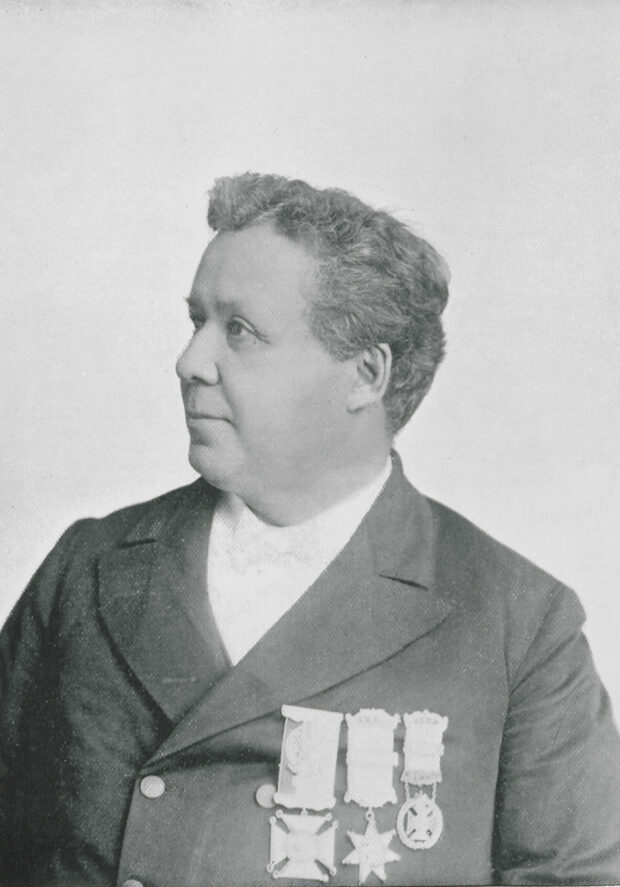
Dr. Oronhyateka, 1841–1907
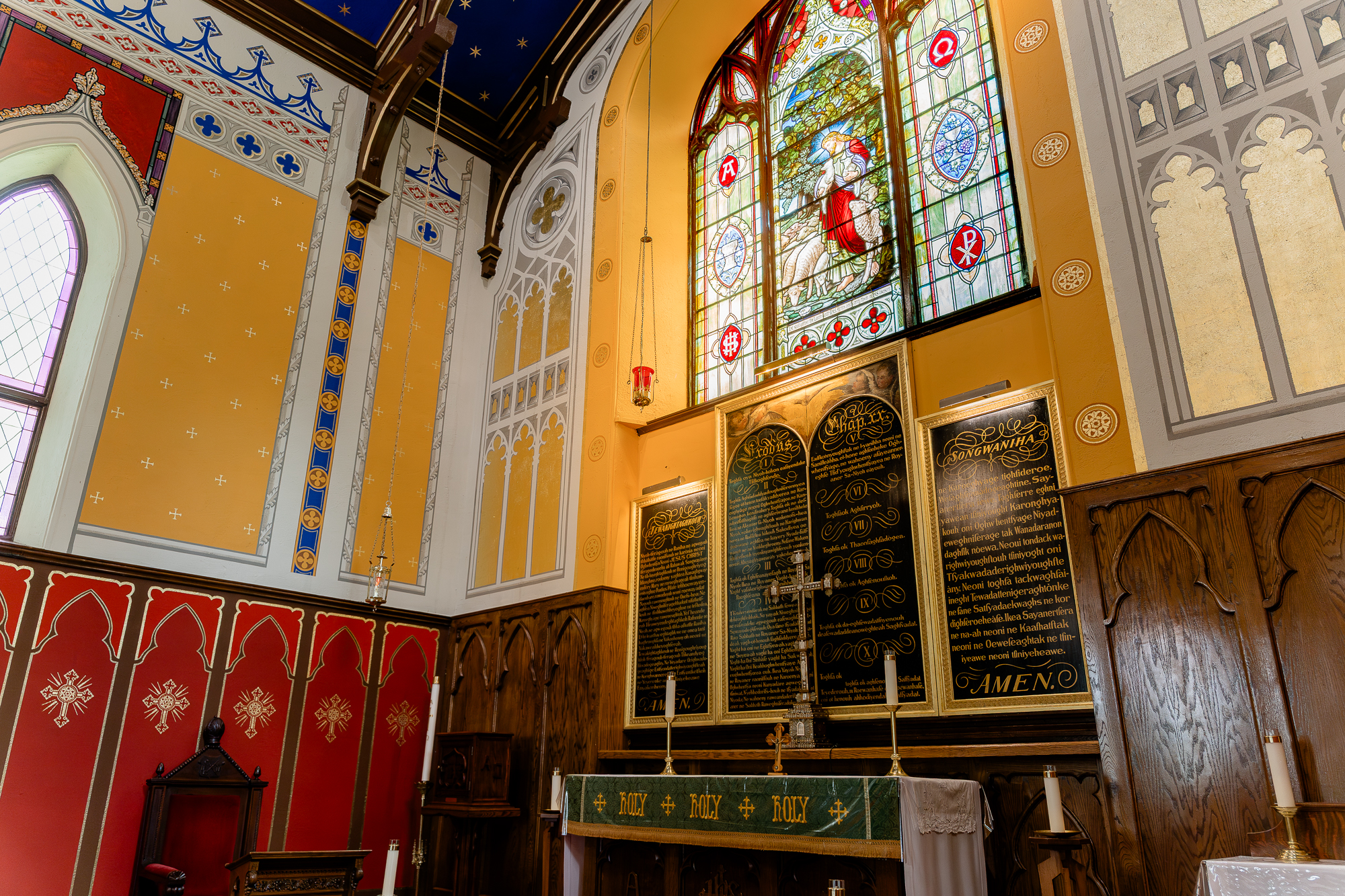
The Memorial Window given by Dr. Oronhyateka and the triptych given by King George III
Historic Designation
As a Chapel Royal, Christ Church is a provincial and national historic site. Plaques have been erected in the Chapel Royal to commemorate the military service of Mohawk Veterans from World Wars I and II demonstrating the close bond of friendship and military alliance that has existed between the Mohawks and the Crown for the last three centuries.
Christ Church stands proudly as a National Monument memorializing the important contribution of the Mohawk people to the historic development and preservation of the land that ultimately became Canada.
Worship
Every Sunday
11:00 am
Morning Prayer
The Parish of Christ the King gathers every Sunday at 11:00 am. All are welcome. Christ the King is affiliated with the Personal Ordinariate of the Chair of Saint Peter, and worships in the the tradition of the Book of Common Prayer. Read More →
Christ Church · Chapel Royal
52 South Church Lane, Deseronto
Tyendinaga Mohawk Territory, Ontario · Canada
Wheelchair Accessible  Air Conditioned
